

← Books by category
Get a quoteText-led typesetting
Continuous reading in a single text column, with carefully judged paragraphs, headings and spacing. These books may also include notes or occasional illustrations.
17 series · 183 books and editions
183 books
Browse publishers and clients →Dates use the first edition in the language and format shown where verified. Other entries retain their recorded work dates while we check them. Books without a confirmed date follow alphabetically.
Other books
Hebrew · Paperback
Text-led typesettingIllustrated booksBusiness and practical guidesHebrew with interpolated EnglishHadasa & Arno
The Hebrew text is set in Hadasa, with Semantica headings. Hebrew reading text runs in a compact single column, with blue chapter headings, running heads and folios. Large initial letters are paired with small character illustrations at chapter openings; numbered practical exercises and occasional English terms are integrated into the right-to-left text.
English
English lecture typesetting combines single-column serif text with italic terms, clear subheadings and numbered footnotes. A full-page historical illustration faces a spacious lecture opening, while running heads and outer page numbers guide readers through the four talks.
English
Text-led typesettingJewish booksScholarly and reference booksBusiness and practical guidesPhilosophy and spirituality
Jewish booksScholarly and reference booksBusiness and practical guidesPhilosophy and spiritualityText-led typesetting
Single-column serif text combines indented source quotations, occasional Hebrew and italic transliterations with numbered footnotes. Large chapter titles and bold subheadings set the hierarchy, while small-cap speaker names distinguish the interview passages and running heads include the outer page numbers.
English · First edition · paperback
Historical photographs fill individual pages above short captions, while essay openings use large pale grey numerals behind serif titles. Boxed memorial dedications and rounded vertical contributor and topic tabs accompany single-column text, italic transliterations and outer page numbers.
English and Hebrew
Separate English and Hebrew sections use single-column pages, centred portion headings and grey rules to distinguish questions, answers and concluding remarks. Numbered answers and nested lettered lists sit within the text measure, with small-cap English running heads and Hebrew running heads tracking the portion.
English
English teaching-book typesetting in Arno combines a single-column serif text with bold condensed sans-serif section headings. Inset italic Bible passages, upright references and occasional bold italic emphasis distinguish quoted material from the commentary. Small-cap running heads and centred bottom folios give the compact pages a consistent framework.
English
English Christian teaching typesetting in Arno Pro pairs a single-column serif text with bold condensed sans-serif section headings and expressive script chapter titles. Inset italic Scripture passages and upright references distinguish the quotations; small-cap running heads and centred bottom folios guide the surrounding prose.
English
Text-led typesettingChristian booksHistory and biographyMemoirs and family historiesPhilosophy and spirituality
Christian booksHistory and biographyMemoirs and family historiesPhilosophy and spiritualityText-led typesetting
English memoir typesetting in Arno combines a single-column narrative with full-page monochrome photographic chapter openers. Indented dialogue and italic quotations sit within generous page margins, while small-cap running heads, outer folios and restrained section headings guide the reader through the story and epilogue.
English · Hardcover
The memoir uses single-column prose with small-cap book running heads, italic chapter running heads and centred folios. Stencil-style chapter numbers and dated diary headings distinguish the chronological sections, while italic date ranges sit beneath the main titles. Question-and-answer passages use hanging labels, and italic transliterated terms and blank-line transitions remain clear within the narrative.
English · Hardcover
Labelled diagrams sit within single-column prose, including text wrapped around a layered circular figure. Chapter openings pair italic chapter labels and subtitles with centred titles, a rule and illustrated topic lists. Leaf ornaments mark bold subheads; small-cap numbered steps and compact footnotes create further hierarchy. The closing two-column index uses letter headings, indented subentries and cross-references.
English
The essays use a single serif column with numbered bold subheadings and compact footnotes. Centred chapter titles sit below small-cap chapter numbers and a fine rule, with generous opening space separating new chapters from the continuous discussion.
English and Hebrew · US paperback edition
English and Hebrew prayers face one another, preserving their different reading directions and individual line breaks. Italic English titles, bold Hebrew headings, contributor names and original-language labels establish a clear hierarchy. Quiet single-column introductions, full-colour artwork with a discreet caption, and spacious bilingual section openings vary the rhythm of the collection.
English
Single-column prose is organised with bold subheads, small-cap running heads and centred folios. Inset Scripture quotations carry separate right-aligned references, while italics distinguish emphasis and transliterated terms. A study section between horizontal rules sets out numbered application questions, a memory verse and a faith response under italic headings.
English · Hardcover · original Devora edition
The biblical study uses single-column prose with bold subheadings, inset quotations and italic emphasis. Ornamental chapter numbers, large titles and drop capitals distinguish the openings. A dialogue passage uses small-cap speaker labels with hanging continuations, while an asterisk footnote keeps its source below the text. Small-cap running heads and centred folios continue through the two-part argument.
English · Hardcover
Short essays use underlined display titles and large dropped initials above single-column prose. Indented paragraphs, italic book-title running heads, small-cap essay running heads and centred folios keep the reading pattern consistent. The section introductions use italic text and right-aligned attributions, with blank facing pages marking the divisions.
English
Compact English teaching-book typesetting in Arno Pro uses a single-column serif text, bold serif section headings and inset italic Scripture passages. Chapter openings pair centred capital labels with large italic titles; references sit beside or beneath the quotations. Small-cap running heads and outside top folios distinguish the ordinary text pages.
English · Gefen edition
A restrained single-column setting carries this Holocaust narrative, with indented paragraphs, clearly separated dialogue and centred page numbers. Chapter openings use small-cap labels above a fine rule and a dropped capital, while the running heads alternate the book title and author’s name.
English
The reading pages use single-column serif text with inset letters and italic emphasis. Small-cap running heads, pointing-hand ornaments and outer folios identify each spread. Study sections combine numbered questions and fill-in lines with separately headed application, memory-verse, faith-response and answer sections; hanging indents keep the question and answer numbers clear.
English · Hardcover
The introduction pairs an italic heading with a large opening initial and numbered footnotes beneath a fine rule. Single-column historical prose uses italic book titles, indented quotations and alternating author/title running heads. Quoted verse retains its line breaks, and the closing bibliography uses hanging indents and repeated-author rules. Centred page numbers carry the sequence from the preliminaries into the main text.
English
Centred capital headings introduce numbered themes within the single-column text, while smaller spaced-cap headings mark individual steps. Scripture passages are set as inset italic blocks with their references attached. Numbered recap questions, italic emphasis, small-cap book and chapter running heads, and centred folios give the teaching a clear reading sequence.
English and Yiddish
English translations and the Yiddish originals face one another in matching single-column pages. Story titles appear in the running heads in each language, with outer page numbers, indented dialogue and verse, and spaced asterisks marking breaks in the narrative.
English · Paperback – first edition
The reading text is set in Arno, with Proxima Nova headings. A business scorecard, comparison tables and a product-development diagram vary the single-column pages; small-cap running heads and outer folios keep the reading structure clear.
English
This novel uses a restrained Arno Pro setting with a steady single-column measure. Indented dialogue, italic phrases and centred scene-break ornaments distinguish the narrative’s changes of voice and scene, while small running heads keep the page furniture unobtrusive.
Hebrew · Compact edition
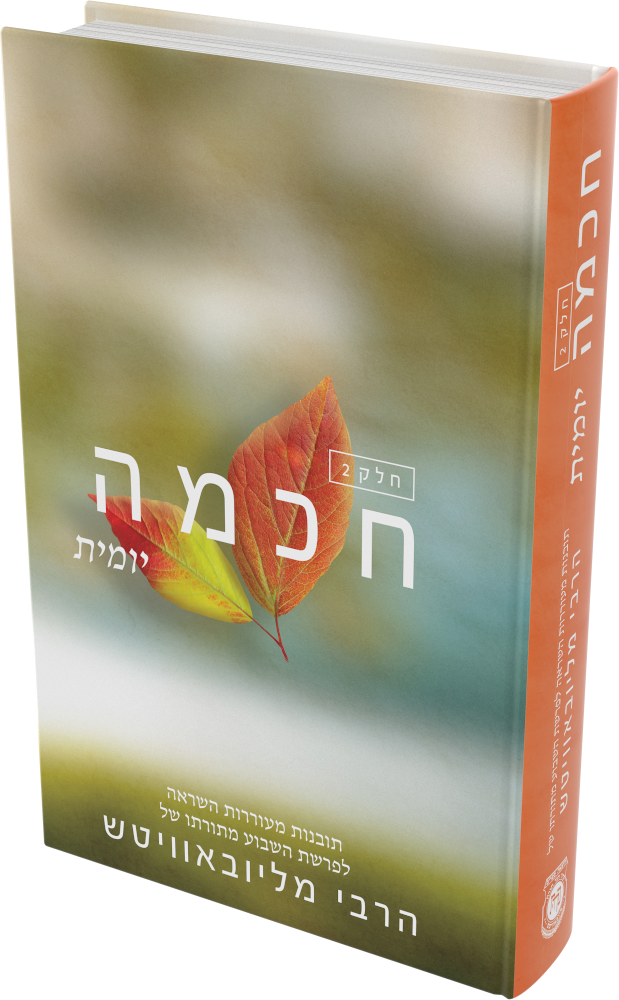
חכמה יומית – חלק שני
Chochmah Yomit – Hebrew compact edition
This right-to-left Hebrew volume separates reading summaries, bold lesson headings and centred pointed quotations within a single-column page. Thin rules, grey outer weekday tabs and small numbered source notes establish a clear hierarchy; spacious portion openings contrast with the denser daily commentary.
English
This compact teaching book combines single-column serif prose with bold narrow sans-serif subheads and smaller bold italic headings. Scripture quotations are inset in italics, with bold italic phrases marking selected emphasis and references kept alongside the passages. Small-cap running heads distinguish book and chapter, above centred folios and consistent paragraph indents.
English · Hardcover
The Michael Scharf Publication Trust of Yeshiva University Press · Ktav Publishing House · Urim Publications
English scholarly typesetting combines single-column essays, inset quotations, italic source titles and transliterated Hebrew terms. Superscript references connect the discussion to compact numbered endnotes. Paired contributor and article running heads sit above fine rules, and a two-column index uses hanging indents and clear subentry levels.
English · Hardcover · second printing, 2014
English memoir typesetting uses a clear single-column text, small-cap subheadings and contrasting book and chapter running heads. Dialogue, indented journal extracts, verse quotations and dated diary entries have distinct treatments, with restrained footnotes and centred page numbers.
English · Pocket edition
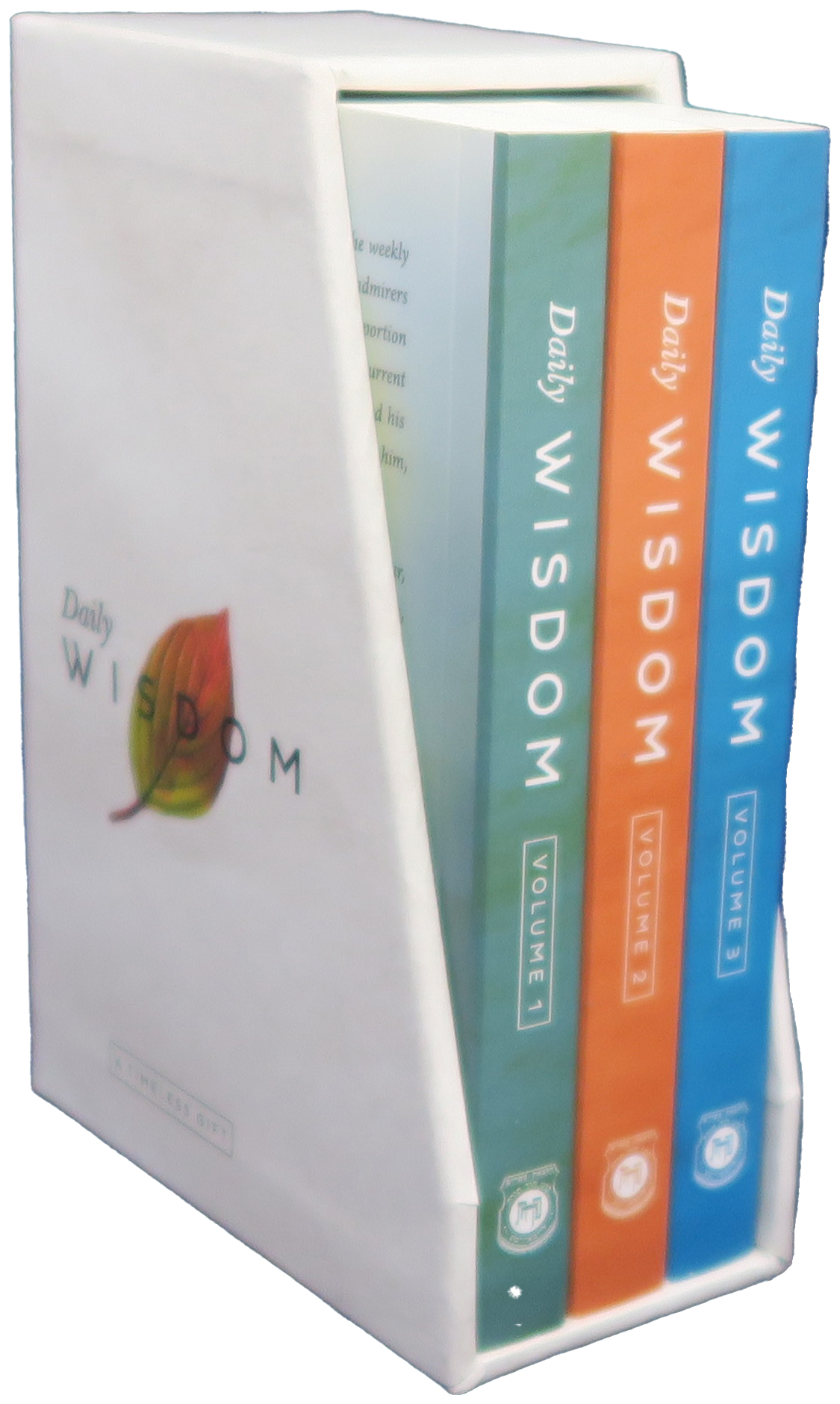
Daily Wisdom – English pocket edition
This pocket volume combines single-column English lessons with pointed Hebrew excerpts and bold translations. Italic headings distinguish the individual insights, small numbered notes collect their sources, and outer weekday tabs identify each reading. Centred portion introductions contrast with the denser daily pages.
English · Compact edition
Daily Wisdom – English compact edition
The compact third volume uses a repeated single-column framework for reading summaries, italic lesson headings, pointed Hebrew sources and bold English translations. Footnotes provide small source references beneath the main text; shaded weekday tabs and paired running heads guide the daily sequence, with centred introductions marking each new portion.
English · Hardcover
The short stories and reflections use single-column prose, with tall condensed headings and generous space above each opening. Italic epigraphs and separated prayer paragraphs distinguish the meditative passages, while alternating running heads and centred folios guide the reader. Illustrated section openers pair Cheryl Gunsher’s drawings with calligraphic titles.
English · Paperback – first English-language edition
Set in Adobe Garamond, the single-column text uses indented paragraphs, italic running heads and outer folios. Italic chapter headings sit above large dropped initials, while short translation notes remain at the foot of the page.
English
Single-column serif text uses centred chapter openings, italic subtitles and clear paragraph indents. Part dividers introduce displayed questions and quotations; numbered references lead to notes, and a compact two-column index uses hanging entries and nested subentries.
English · Paperback – first edition
The reading text is set in Palatino Nova. Sans-serif headings, shaded comparison tables and circular role and stakeholder diagrams organise the leadership material within the single-column pages.
English and Hebrew
Single-column English commentary incorporates pointed Hebrew sources and their English translations. Large sans-serif portion headings and fine rules distinguish the main divisions, while bold essay titles, italic transliterations and paired book and portion running heads organise the shorter discussions.
English
Chapter openings pair a small-cap chapter label and short rule with a large italic title and a drop initial. The single-column serif text distinguishes Scripture in inset italic blocks, with references aligned at the end; longer passages retain their verse line breaks. Numbered lists, small-cap book and chapter running heads, and centred folios organise the compact pages.
English
English narrative set in a single serif column combines indented paragraphs with italic transliterated words. Chapter openings use small-cap chapter numbers, fine rules and large titles; book and chapter running heads, diamond separators and outer folios give the continuous account a consistent structure.
English
The commentary combines single-column English prose with vocalised Hebrew verses, English translations and centred small-cap section headings. Smaller source notes sit beneath short rules, and the running heads distinguish the book title from the weekly Torah portion.
English · First edition, paperback
Text-led typesettingJewish booksBibles and biblical commentaryScholarly and reference booksPhilosophy and spirituality
Jewish booksBibles and biblical commentaryScholarly and reference booksPhilosophy and spiritualityText-led typesetting
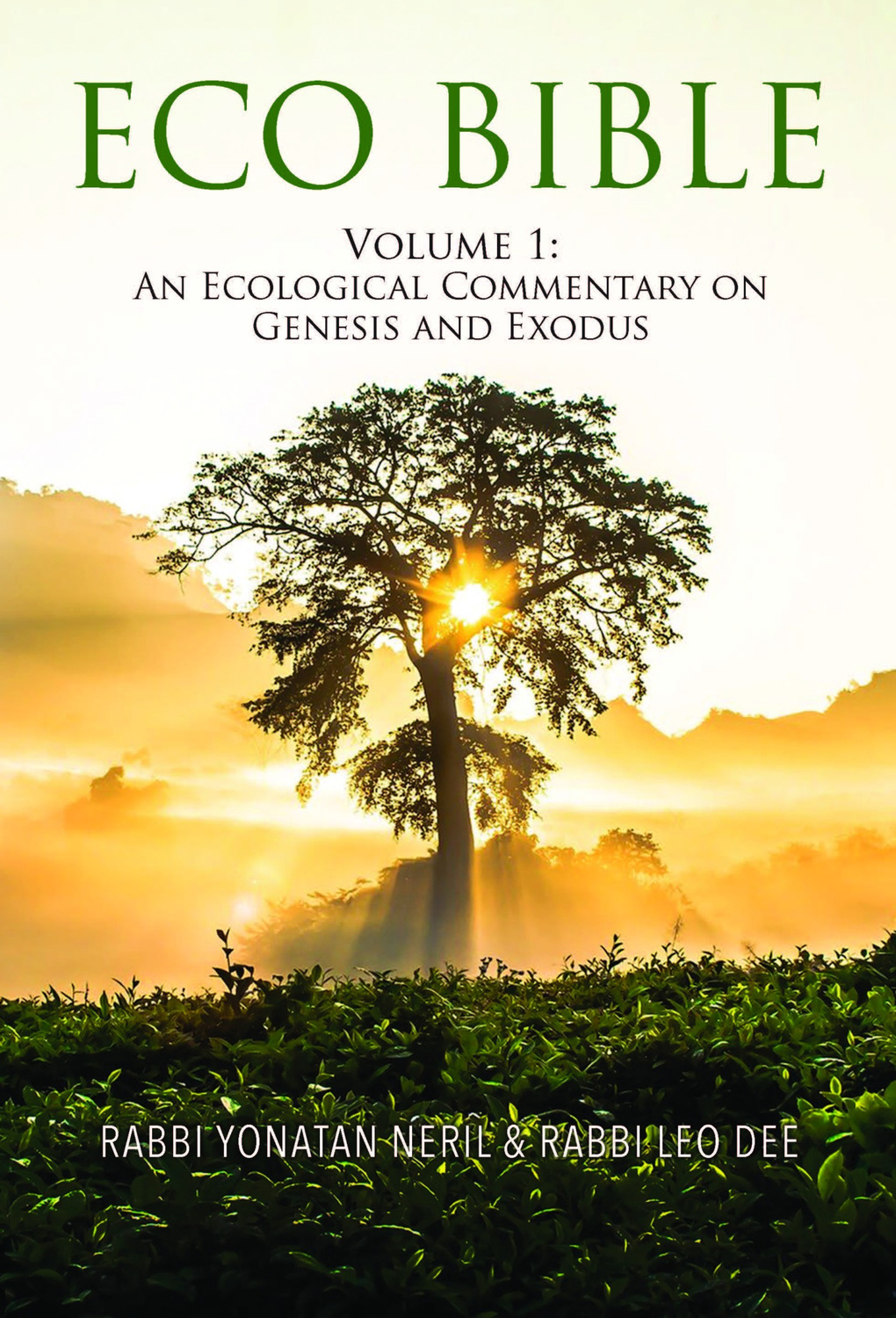
The ecological commentary is set in Arno Pro with Requiem headings and ornaments. Small-cap section titles and italic Bible quotations distinguish the sources from the single-column discussion; inset quotations, numbered action lists and a compact two-column index give the reference material its own structure.
English · Hardcover
Monthly chapters use script titles, double rules and italic introductory labels. Single-column prose includes inset italic quotations, small-cap subheadings and numbered footnotes below fine rules. Short visualisation passages are separated by asterisks and clear paragraph breaks. The appendix combines pointed Hebrew with an English rendering set in verse-like lines, while running heads pair chapter titles and folios with fine vertical separators.
English
Single-column narrative uses indented paragraphs, italic subheadings and italicised phrases. Photographic sections combine portrait and landscape images in groups with centred italic captions, preserving space between photographs of different proportions. Small-cap book running heads alternate with italic section titles, with folios at the outer edges.
English
The teaching uses single-column serif prose, centred capital subheads and small-cap book and chapter running heads. Scripture quotations appear as inset italic blocks, with references placed at their ends; shorter quotations remain within the paragraphs. Italic transliterations, a short line-broken verse and centred folios fit into the same measured text area.
English · Paperback – first edition
The reading text is set in Arno, with Texta Alt headings and Corporative Alt running heads and folios. Numbered chapter openings, inset examples, short lists and bold section labels organise the single-column business guide.
English
Single-column prose is paired with indented italic scripture quotations and separate references. Chapter openings use a large numeral, a fine horizontal rule and a sans-serif title, followed by a tall initial; the summary adds hanging bullet points. The journal section switches to sans-serif prompts and ruled writing spaces, with italic quotations below. Small-cap running heads and centred folios continue across both sections.
English
Arno Pro essays use bold subheadings, italic transliterations and inset biblical quotations within a consistent single-column page. Numbered footnotes sit below short rules, while restrained running heads and outer folios keep the different essays connected.
English
Dated letters place right-aligned dates above left-aligned recipient lines, followed by indented single-column prose. Italic running heads sit above fine horizontal rules, alternating the short title with the subtitle; folios are centred below. Occasional italic phrases and three-asterisk breaks distinguish emphasis and changes within the longer essays.
English
Single-column Arno Pro typesetting brings together scientific discussion and Torah interpretation, with inset italic quotations, centred headings and compact running heads. A labelled map is integrated with the text, and separate name and subject indexes use two-column layouts with hanging entries.
English
Single-column serif text is framed by small-cap author and lecture running heads and page numbers at the outer edges. Lecture openings pair a large italic number and centred title with a monochrome illustration, giving a clear pause between the continuous passages.
English
Generously spaced chapter openings use an italic chapter number above a large serif title. The single-column reading text keeps italic philosophical terms and bold subheadings distinct, with compact footnotes below short rules and centred page numbers.
English
A narrow single-column measure carries the discussion, with indented paragraphs and inset italic scripture quotations. Small-cap translation labels sit at the ends of the quotations. Chapter openings use a centred spelled-out number, a short rule and a small-cap title, with a tall initial starting the text below. Alternating small-cap running heads and centred folios keep the pages consistent.
English and Hebrew · Hardcover
English and Hebrew essays use single-column text with clear heading levels, alternating author and article running heads, and outer folios. Archaeological photographs, measured drawings and maps sit with compact captions, while ruled tables align images with descriptive data. Mixed-direction bibliographies distinguish names, dates and italic titles.
English · Hardcover
The single-column text combines bold subheadings with italic running heads and centred folios. Line graphs and ruled tables sit within the page measure, while numbered chapter notes, hanging bibliography entries and a two-column index give the reference sections distinct structures.
English
Typesetting for an illustrated English biography of Giacomo Meyerbeer. Single-column prose incorporates indented documentary quotations, italic titles and superscript note references. Portraits and medallion images have centred italic captions, while compact footnotes sit below short rules. Small-cap running heads and outer folios provide continuity across the pages.
English
English scholarly typesetting combines a single-column serif text with italic running heads and centred bottom folios. Roman-numbered analytical passages, smaller Arabic-numbered source notes, italic transliterations and selective bold emphasis distinguish the layers of discussion. Roman-numbered section headings organise the longer arguments.
English · Second edition (2017)
English typesetting in ITC Legacy sets the biblical commentary in a steady single-column serif text. Centred chapter openings combine spaced small capitals, a fine rule and a larger title. Alternating small-cap running heads and outside folios guide the reader, while indented paragraphs, italic transliterations, numbered arguments and a small ornamental break distinguish the discussion and quoted passages.
English
Indented prose and inset italic scripture quotations share a narrow single-column measure, with references placed on separate lines. Chapter openings combine a condensed chapter label, a small ornament and an italic title above a tall initial. The closing recommendation pages arrange cover images above short descriptions and compact publication details. Small-cap running heads and centred folios guide the main text.
English
Justified single-column prose uses indented paragraphs, with condensed uppercase subheadings marking changes of topic and numbered steps. Smaller, lighter subheadings introduce a further level within the discussion. Scripture quotations are inset in italics, with separate references, small-cap translation labels and occasional bold emphasis. Small-cap running heads alternate the book and chapter titles above centred folios.
English
English and Hebrew typesetting for this guide to Esther. Vocalised Hebrew verses sit directly above bold English translations, followed by commentary with bold quoted phrases. The earlier narrative sections use centred subheadings and italic summaries; chapter openings pair small-cap numbers, a fine rule and a larger title. Single-column text and alternating running heads keep the sequence clear.
English
A single-column English guide with numbered Hebrew source notes set right aligned at the foot of the page. Centred capital headings and smaller mixed-case subheadings organise the practical guidance, with bullets and small-cap question labels for lists and questions. Chapter openings combine a small-cap chapter number, fine rule and large bold title; running heads and outer folios guide the reading pages. The English reading text is set in Arno, with Hebrew source notes in Frank Rühl.
English
English book design and typesetting in Arno Pro combines single-column essays with Hebrew quotations and italic transliterations. Bold occasion labels sit above larger serif essay titles, while grey vertical holiday tabs and outside bottom folios guide the reader through the High Holiday talks.
English
Vocalised Hebrew source passages alternate with English translations and commentary in a single serif column. The footnotes accommodate extended Hebrew extracts as well as brief references; chapter openings use a small-cap portion heading, fine rule, larger title and drop capital.
English · Paperback edition
An English memoir set in a steady single-column serif text, with indented paragraphs and italic titles within the narrative. Paired small-cap running heads and page numbers guide the chapters; bold subheadings introduce changes of topic, while an occasional footnote sits beneath a short rule without interrupting the main reading measure.
English
The English reference collection uses hanging bullets and italic source citations alongside a single-column serif text. Embedded Hebrew phrases retain their direction within the English lines. Article openings add light sans-serif headings and fine rules, while small-cap running heads, bottom folios and numbered footnotes give the longer discussions a consistent structure.
English
Single-column prose is organised by centred uppercase headings, italic numbered subheadings and smaller headings marked with a small flourish. Numbered and bulleted lists align their continuations beneath the text. Inset italic scripture quotations carry separately placed references and small-cap translation labels. Small-cap book and chapter running heads alternate above centred folios.
English · Book II: Psalms 42–72
Hebraic Origins of the English Language in the Book of Psalms
Text-led typesettingTables, charts and mapsJewish booksBibles and biblical commentaryScholarly and reference books
Jewish booksBibles and biblical commentaryScholarly and reference booksText-led typesettingTables, charts and maps
The second volume continues the Arno Pro setting for Psalms 42–72, combining single-column analysis with English–Hebrew word-origin tables. Centred chapter headings and drop capitals introduce each Psalm, while compact footnotes, italic transliterations and mirrored running heads support the scholarly text. A compendium and an appendix retain the same page structure with their own navigational headings.
English · Journal issue for 2016
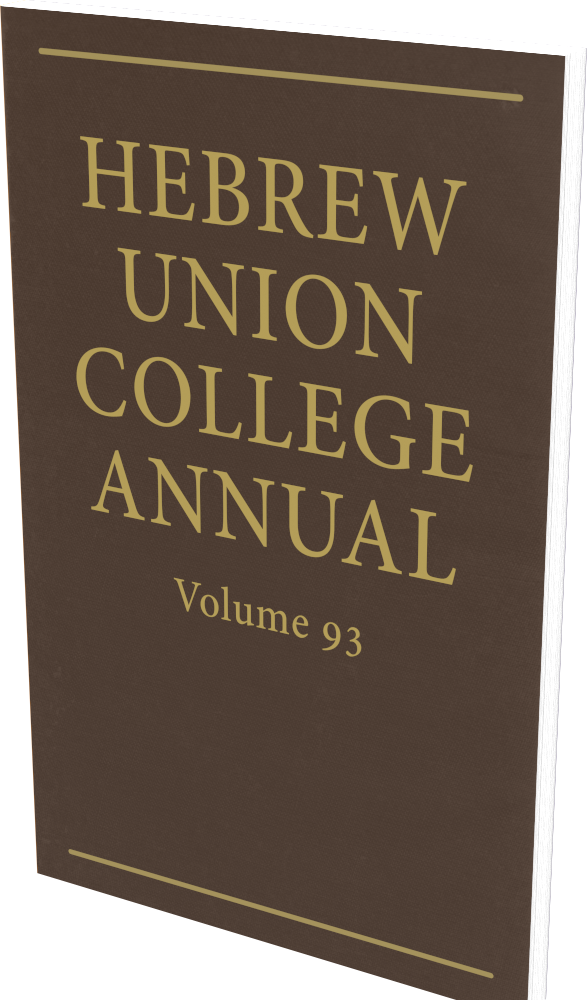
Hebrew Union College Annual (HUCA)
Text-led typesettingJewish booksScholarly and reference booksEnglish with interpolated HebrewMinion & Shefa
HUCA Volume 87 presents biblical, rabbinic and philosophical articles with multilingual quotations and dense source notes. Italic subheadings, numbered examples and indented passages provide structure within the single-column setting. A manuscript study also reproduces extended textual passages without losing the journal’s running-head and folio system.
English · Journal issue for 2019
Hebrew Union College Annual (HUCA)
Text-led typesettingJewish booksScholarly and reference booksEnglish with interpolated HebrewMinion & Shefa
HUCA Volume 90 brings biblical analysis, rabbinic interpretation and contemporary cultural scholarship into the same journal setting. Indented Hebrew and English passages, song lyrics and italic subheadings sit within the single-column articles. Compact footnotes and paired running heads retain a consistent structure across contributions.
English · Journal issue for 2020
Hebrew Union College Annual (HUCA)
Text-led typesettingJewish booksScholarly and reference booksEnglish with interpolated HebrewMinion & Frank Rühl
HUCA Volume 91 combines rabbinic narrative, biblical interpretation and historical translation in a single-column journal format. Subheadings and indented passages establish article structure, while Hebrew quotations remain legible within the English prose and notes. Mirrored running heads identify each contributor and study.
English · Journal issue for 2021
Hebrew Union College Annual (HUCA)
Text-led typesettingJewish booksScholarly and reference booksEnglish with interpolated HebrewMinion & Frank Rühl
HUCA Volume 92 integrates English articles with Hebrew quotations, translated reference material and verse extracts. Its compact typography distinguishes italic subheadings, numbered sections and indented poetry from continuous prose. Separate footnote blocks and mirrored running heads keep the different contributions navigable.
English
Hebrew Union College Annual (HUCA)
Text-led typesettingParallel textsJewish booksScholarly and reference booksEnglish with interpolated HebrewMinion & Frank Rühl
HUCA Volume 94 accommodates biblical scholarship, rabbinic analysis and an edited Hebrew poem. Single-column articles use italic subheadings and compact notes, while the poem is presented in aligned Hebrew and English columns. Running heads and outer folios connect the varied material within the journal.
English and Hebrew · Journal issue for 2011–2012
Hebrew Union College Annual (HUCA)
Text-led typesettingScholarly apparatusTables, charts and mapsJewish booksScholarly and reference booksEnglish with interpolated HebrewMinion & Shefa
This HUCA double issue brings English and Hebrew articles into one journal record. The single-column serif setting combines block quotations, compact numbered notes and mirrored running heads. The Hebrew section includes a ruled comparison of manuscript readings, with its own Hebrew folios.
English · Hardcover
The narrative is set in a single column with indented dialogue and italic running heads that identify the book, chapter, place and year. Inserted photographic plates combine numbered italic captions with images of different proportions. The two-column index uses hanging entries and indented subentries, with centred folios throughout.
English
English nonfiction page layout uses a single-column serif text with indented paragraphs, bold subheadings and italic emphasis. Chapter openings combine bold italic headings, centred quotations and drop capitals beneath a winged-heart ornament. Alternating running heads and centred bottom folios carry the hierarchy across the pages.
English · Hardcover
Single-column serif text is organised by ornamental parashah openings, a separate Haftarah reference and clear essay and small-cap subheadings. Italic quotations and transliterated terms sit within the prose, with light sans-serif running heads, centred folios and an explanatory bibliography using hanging indents.
English
Chapter openings combine an italic chapter number, a large serif title and a fine horizontal rule above a drop capital and small-cap opening words. Within the chapters, italic subheads and indented scripture distinguish the different levels of text. Short numbered lists and occasional source notes fit the same single-column page design.
English · Hardcover · translated from the French
Text-led typesettingJewish booksTranslationsScholarly and reference booksPhilosophy and spirituality
Jewish booksTranslationsScholarly and reference booksPhilosophy and spiritualityText-led typesetting
The scholarly text uses bold small-cap subheadings, separated quotations and superscript note calls within single-column prose. Italic running heads distinguish the book and chapter titles. The back matter includes compact numbered endnotes with hanging continuations and a two-column author index with alphabet headings and italic cross-references.
English
Chapter openings pair a calligraphic chapter label with a bold condensed sans-serif title and a calligraphic initial. The narrow single-column text uses bold condensed subheadings, indented paragraphs and inset italic scripture quotations with separate references. Bold and bold italic phrases distinguish selected statements and numbered guidance. Small-cap running heads and centred folios retain a consistent page framework.
English
English typesetting in ITC Legacy combines a single-column serif text with italic running heads and centred folios. Bold section titles and italic rule or chapter labels establish the hierarchy; greyscale cartoons sit within the text width. Indented paragraphs, short question sequences and italic option labels give the longer discussions a consistent rhythm.
English · Hardcover
Text-led typesettingIllustrated booksTables, charts and mapsJewish booksTranslationsScholarly and reference booksHistory and biography
Jewish booksTranslationsScholarly and reference booksHistory and biographyText-led typesettingIllustrated books
The English narrative uses single-column prose, indented quotations and numbered footnotes beneath fine rules. Photographic plates combine archival images and manuscript reproductions with individual captions. A three-column comparative glossary aligns transliterations and meanings above explanatory notes, while the bibliography uses hanging entries and italic source titles.
English · English paperback edition
The English translation uses a single-column serif text with Pāli and Sanskrit diacritics, indented quotations and numbered explanatory footnotes. Italic running heads distinguish sections and chapters, while numbered lists and a hanging-entry bibliography organise the reference material.
English · Hardcover
A ruled three-column timeline organises dates, names and explanations before the main text. The chapters use single-column prose, italic terminology and centred small-cap subheadings, with small-cap book-title running heads facing italic chapter heads. The glossary combines italic headwords with upright definitions and hanging continuations; Roman preliminary folios give way to Arabic page numbers in the main text.
English
Single-column serif text combines colour photographs, diagrams and italic captions with bold subsection headings. Smaller images sit beside shaped text, while chapter openings use larger headings and coloured dropped initials; small-cap running heads and outer folios keep the illustrated pages consistent.
Hebrew
האסלאם והיהדות: המאחד והמפריד
Right-to-left Hebrew text combines continuous prose with question-and-answer sections, numbered lists and inset source quotations. Bold sans-serif subheadings distinguish short topics from the serif body text, while paired book and chapter running heads and outer folios provide a consistent framework.
English
English typesetting in Arno combines a single-column reading text with small-cap book and chapter running heads and outer folios. Superscript note calls lead to collected endnotes, where hanging numbers, italic publication titles and page-range headings organise the references. Dialogue and extended quotations retain distinct paragraph spacing and speaker labels.
English
A measured single-column layout supports Sol Roth’s discussions of Jewish philosophy and ethics. Inset quotations and compact numbered footnotes distinguish supporting material from the main argument, while centred Roman numerals divide the longer essays into sections.
English · Second, revised edition
A consistent single-column layout carries this halakhic guide to marriage, with centred chapter numbers, italic titles and clearly separated subheadings. Superscript references lead to a compact notes section, followed by a classified bibliography whose italic work titles distinguish the sources from the surrounding citation details.
English · Second edition, with revisions and updates · hardcover
Text-led typesettingJewish booksScholarly and reference booksPhilosophy and spiritualityEnglish with interpolated HebrewArno & Frank Rühl
Jewish booksScholarly and reference booksPhilosophy and spiritualityText-led typesettingEnglish with interpolated Hebrew
The English text is set in Arno, with pointed Hebrew quotations in Frank Rühl. Small-cap book running heads, italic chapter running heads, drop capitals and inset quotations structure the single-column pages. Ruled footnotes, hanging bibliography entries and two-column source indexes provide the scholarly reference structure.
English · Hardcover
Text-led typesettingScholarly apparatusJewish booksScholarly and reference booksPhilosophy and spiritualityEnglish with interpolated Hebrew
Jewish booksScholarly and reference booksPhilosophy and spiritualityText-led typesettingScholarly apparatus
The English reading text is set in Arno. Spacious chapter openings lead into a single-column layout with inset quotations, occasional Hebrew terms and small-cap running heads. Numbered endnotes use a smaller setting with Hebrew passages and references, while the two-column index organises references to Maimonides’ writings.
Spanish and Hebrew · Edición Familia Perez – hardcover
Text-led typesettingParallel textsJewish booksBibles and biblical commentaryPrayer books and liturgyTranslations
Jewish booksBibles and biblical commentaryPrayer books and liturgyTranslationsText-led typesettingParallel texts
Pointed Hebrew scripture and Targum Onkelos sit above Rashi and Spanish commentary, facing a larger single-column interpolated Spanish translation. Bold and regular text distinguish translation from explanation, while marginal headings, ruled two-column commentary and compact source notes organise the changing text lengths. The haftarot use a separate parallel-text arrangement.
English · Paperback
The reading text is set in Adobe Caslon, with Didot chapter headings. Small-cap running heads, numbered chapter openings and italic quotations structure the single-column pages; shaded comparison tables provide a contrasting reference format.
English
Comparative tables align Hebrew letters and pointed forms with Latin transcriptions, grammatical labels and French equivalents. The surrounding single-column study uses bold and italic subheadings, numbered footnotes and small-cap running heads, while chapter openings separate the large title from the text below.
English
A narrow single-column measure carries indented prose, with italic phrases distinguishing quoted words and key terms. Longer scripture passages use an inset italic measure, with references aligned at the end. Numbered lists give wrapped lines a hanging alignment. Small-cap running heads alternate the book and chapter titles, with centred folios below.
English · Paperback – first edition
The reading text is set in Arno, with condensed headings and script chapter numbers. Kitchen-layout drawings, inset subheadings and numbered sections organise the practical guidance within the single-column pages.
English
English typesetting for an illustrated study of biblical natural history. Single-column prose is combined with indented source quotations, italic scientific names and numbered reference markers. Captioned maps, photographs and other images vary the page rhythm, while chapter openings use centred headings and a short rule above the text; running heads and outer folios maintain orientation.
Hebrew
Hebrew typesetting for this illustrated edition. Single-column right-to-left text combines vocalised source passages, italic scientific names and numbered reference markers with bold subsection headings. Captioned photographs, coins and historical images are sized to the surrounding discussion. Centred chapter openings, fine rules and consistent running heads and folios give the pages a clear hierarchy.
English · Paperback edition
English autobiographical writing in single-column serif text is paired with restrained sans-serif headings and running heads. Chapter and appendix openings use a short rule, italic epigraphs and drop capitals; poems retain their stanza breaks and separate measure. Bold question headings and a final notes-and-references section provide structure without disturbing the main narrative.
English · Volume I · second edition
This second edition retains the question-and-answer structure, with grey entry identifiers, sans-serif titles and bold labels. Italic terms and numbered source notes sit within a single-column serif text; a revised glossary uses bold headwords, hanging indents and compact question references.
English · Volume III · hardcover
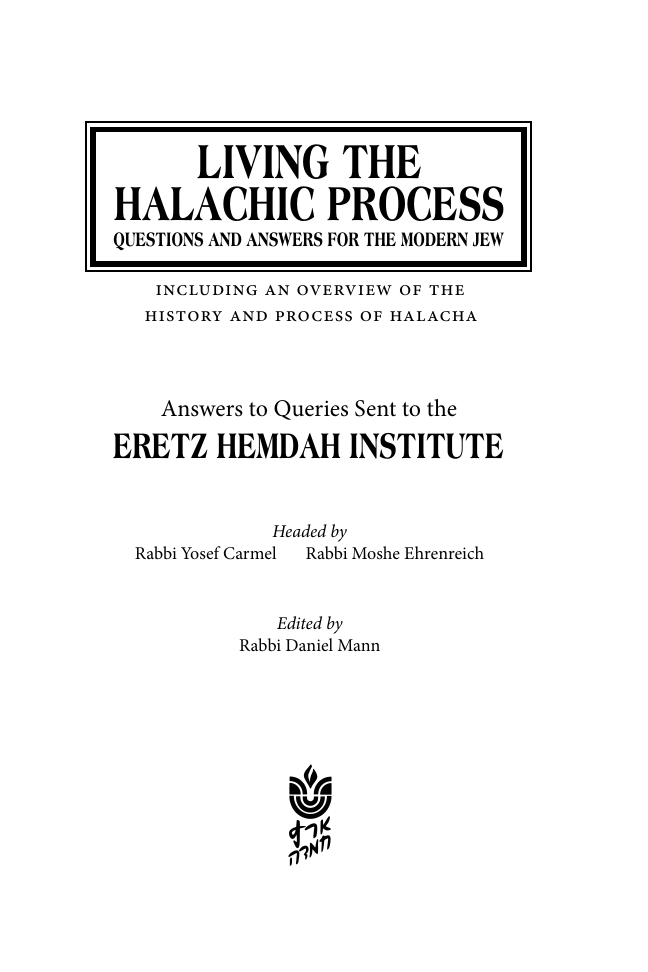
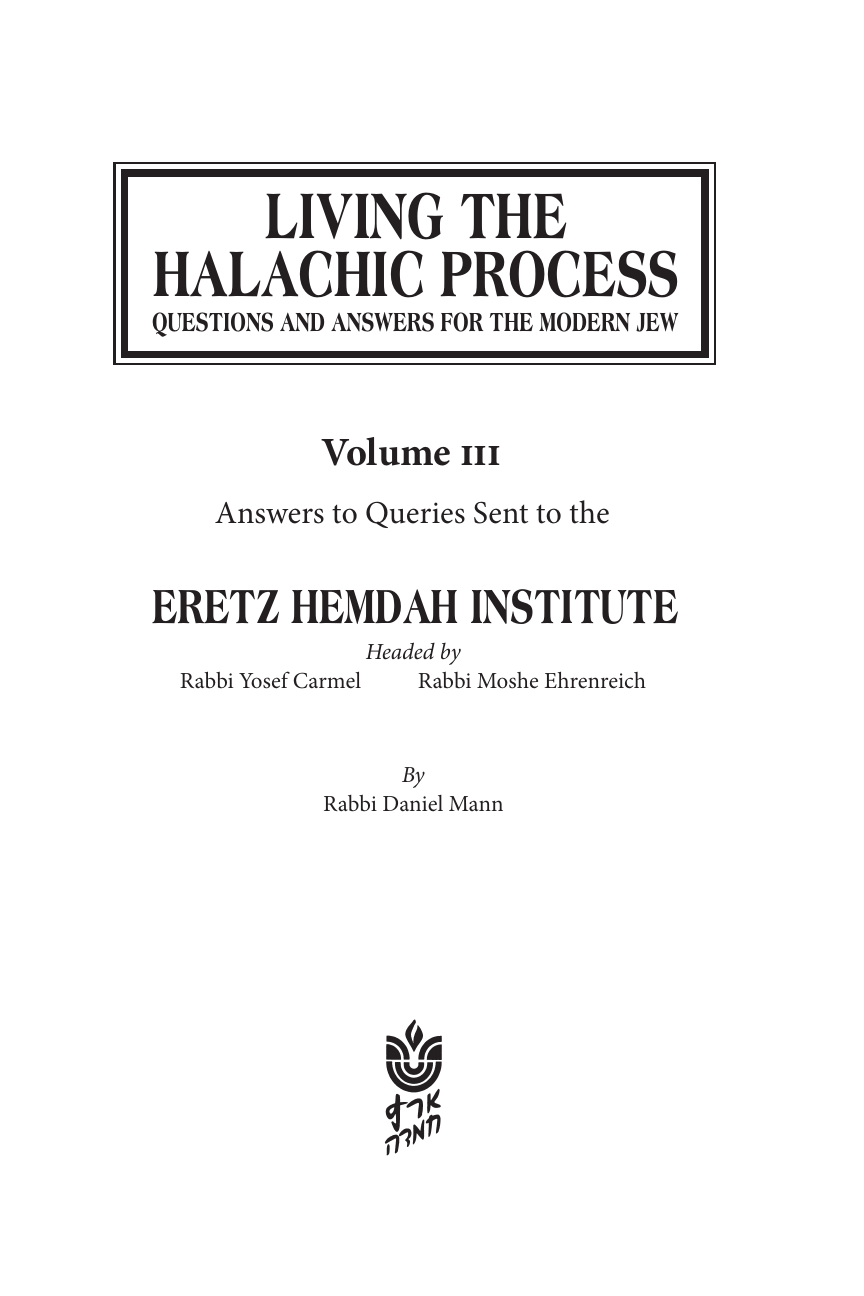
Halachic questions and answers use grey letter-and-number identifiers, sans-serif titles and bold Question and Answer labels. The single-column serif text keeps italic transliterations and numbered source notes distinct, while a glossary combines bold headwords, hanging indents and compact references to the questions.
English
The English translation uses a steady single-column fiction layout, with indented dialogue and centred dot ornaments marking changes of scene. Small-cap running heads distinguish the book title from the author’s name, and the even text measure keeps long narrative passages easy to follow.
English · Paperback – first edition
The reading text is set in Arno, with ITC Franklin Gothic headings. Short numbered chapters, dialogue set on separate lines and generous chapter openings organise the single-column pages.
English
Single-column Torah essays use small-cap subheadings, indented quotations and compact footnotes beneath a short rule. Hebrew phrases sit within the English text, while alternating running heads and outside folios distinguish the book and essay titles.
English · In Commemoration of His 120th Birthday and His 30th Yahrzeit – Pesach 5783
A restrained single-column design carries these recollections of Rabbi Joseph B. Soloveitchik. Centred section openings, drop capitals and compact footnotes establish the hierarchy, while a historical photograph, caption and Hebrew quotation give the prefatory pages their own character.
English · Hardcover
Single-column serif text is structured with small-cap subheadings, numbered questions and italic titles and terms. Chapter openings combine a ruled chapter number with an italic heading and a large initial; restrained small-cap running heads and outer folios carry through to the hanging-indent bibliography.
English
English single-column serif text gives three translated articles a consistent page structure. Italic terms and source titles, restrained small-cap subheadings, indented paragraphs and alternating book and article running heads distinguish the discussion without interrupting the reading measure.
English
Text-led typesettingTables, charts and mapsJewish booksBibles and biblical commentaryScholarly and reference books
Jewish booksBibles and biblical commentaryScholarly and reference booksText-led typesettingTables, charts and maps
This scholarly volume brings together a supplied historical map, structured chapter outlines and substantial biographical and textual discussion. A clear hierarchy of headings guides the single-column prose and numbered footnotes, followed by a compact two-column index with indented subentries.
English
A single serif column carries the business advice, with contrasting sans-serif subheadings and occasional compact footnotes. Chapter openings use a small-cap chapter number above a centred title, set low on an otherwise open page.
Hebrew
מִנְחָה מַאֲפֵה
Large Hebrew chapter titles introduce single-column Torah lectures. Bold subheadings and numbered points divide the discussion, with quoted passages set into the text and compact numbered footnotes beneath a separating rule. Occasional English references retain their left-to-right direction within the Hebrew notes. Running heads and folios guide the reader through the right-to-left sequence.
English · Hardcover
Text-led typesettingIllustrated booksJewish booksTranslationsHistory and biographyMemoirs and family histories
Jewish booksTranslationsHistory and biographyMemoirs and family historiesText-led typesettingIllustrated books
The memoir combines single-column narrative with archival photographs and reproductions of Hebrew documents. Italic captions sit directly beneath the images, while indented italic letters and numbered points distinguish quoted material within the text. Small-cap book-title running heads alternate with italic chapter headings, above centred italic folios.
English
Text-led typesettingIllustrated booksJewish booksBibles and biblical commentaryScholarly and reference books
Jewish booksBibles and biblical commentaryScholarly and reference booksText-led typesettingIllustrated books
Large reproductions of early printed books and manuscripts sit alongside a single-column scholarly text, each with a numbered caption. Small-cap running heads and outer page numbers guide the chapters; indented quotations, italic titles and substantial footnotes keep the discussion and its sources distinct.
English · Hardcover
The memoir pairs a photo album of varied portrait and landscape images with centred italic captions. Chapter openings use large titles, chapter numbers and prominent initials above single-column prose. Remembered scenes appear in italics, distinct from the surrounding narrative. Small-cap running heads identify the book and chapter, while centred folios maintain the sequence through the text and author biography.
English
English memoir typesetting in Arno Pro combines a single-column serif text with italic chapter labels, bold titles, drop capitals and small-cap opening words. Spaced small-cap running heads and centred bottom folios guide the prose, including numbered lists. Colour portrait plates use black backgrounds, fine borders and short white captions.
English
English typesetting for the fifth volume of Mysteries of Judaism. Chapter openings combine a quill motif, italic chapter label, centred title and grey introductory panel. Small-cap subheadings, bulleted questions and numbered discussion points organise the single-column prose, with book and chapter running heads linking the pages.
English · Softcover
An illustrated chapter opening pairs a line drawing with an italic chapter label and a large display title. Single-column prose uses centred small-cap subheadings, italic terminology and alternating italic running heads. A three-column comparison table keeps its headings and entries aligned beside a section introduced by a Hebrew letter. The closing works-cited list uses hanging indents and italic titles.
English · Second edition, with updates and revisions
English scholarly typesetting in Arno combines centred chapter openings and drop capitals with a steady single-column text. Italic transliterations, occasional Hebrew terms, inset quotations and numbered footnotes support the discussion, while a compact two-column subject index provides a separate reference structure.
English
The study uses a single serif column with indented quotations, small-cap subheadings and substantial footnotes beneath short rules. Chapter openings combine an italic chapter number with a bold sans-serif title, distinguishing the larger divisions from the detailed commentary.
English · Hardcover – first edition
The reading text is set in Minion, with italic running heads, outer folios and indented paragraphs. Numbered chapter openings separate the chapter title from an introductory passage, while continuous case narratives and italic emphasis retain a consistent single-column structure.
English · Paperback
The memoir uses a single-column serif setting with indented paragraphs, italic book and story running heads, and centred italic page numbers. Large story titles and small-cap opening lines distinguish the short pieces, while the glossary uses bold letter headings and hanging indents.
English
Text-led typesettingChristian booksHistory and biographyMemoirs and family historiesPhilosophy and spirituality
Christian booksHistory and biographyMemoirs and family historiesPhilosophy and spiritualityText-led typesetting
The memoir uses a narrow single-column text measure with indented paragraphs. Light uppercase sans-serif running heads distinguish the book and chapter titles, while sans-serif folios are centred beneath the text. Scripture appears both within the narrative and as inset italic quotations, with compact references and small-cap translation labels kept close to the passages.
English
Typesetting for an English guide linking parenting with the weekly Torah portion. Serif prose is paired with bold sans-serif subheadings and rounded grey For Discussion boxes, whose questions use a contrasting sans-serif face. Large, light chapter headings mark the parashah openings; italic transliterated terms and running heads provide detail within the consistent single-column layout. The reading text is set in Arno; headings, running heads and discussion panels use Ideal Sans.
English
The English memoir pairs a single-column serif text with italic running heads and bold outer folios. Supplied filmstrip artwork introduces script chapter numbers and slab-serif titles, with drop capitals below. Inset verse keeps its stepped lines and stanza spacing, while dated chapters add a fine rule and italic date.
English · Revised and updated second edition · Paperback
The reading text is set in Arno. Sans-serif headings, inset italic quotations and bulleted lists distinguish the practical guidance; spacious chapter openings and alternating running heads structure the single-column pages.
English
Colour manuscript reproductions are arranged in varied groups beside compact outer-margin captions. A single column carries each essay, with green contributor names, running feet and page numbers; the endnotes switch to three narrow columns with bold note numbers and italic source titles.
English
Large serif Torah-portion headings introduce the essays, with smaller italic titles marking the psychological themes. The single-column English discussion incorporates occasional vocalised Hebrew quotations and translations, while small-cap running heads and outside folios identify the book and portion.
English
The main text and notes are set in Arno, with Requiem running heads and Ideal Sans photograph captions. Single-column narrative pages lead into photographic sections and a two-column index with hanging entries.
English
The English translation is set in a single serif column, with a contrasting sans-serif chapter heading and a pale summary beside a fine vertical rule. Numbered explanatory notes occupy a smaller text size below short rules, keeping the translation and its annotation distinct.
English
English book design and typesetting in Arno Pro uses single-column text with Hebrew quotations, italic transliterations and numbered bold serif headings. Small-cap subheadings with small ornaments divide the essays, and grey vertical festival tabs pair with outside bottom folios.
English and Hebrew · Paperback – first edition
Text-led typesettingJewish booksPrayer books and liturgyTranslationsEnglish with interpolated Hebrew
Jewish booksPrayer books and liturgyTranslationsText-led typesettingEnglish with interpolated Hebrew
The English reading text and transliterations are set in Adobe Jenson, with pointed Hebrew prayers in Hadasa. Small-cap running heads, italic chapter running heads and outer folios frame the single-column pages. Chapter openings use small-cap chapter numbers and italic drop capitals, while prayer passages distinguish Hebrew, italic transliteration and English translation.
English · Hardcover
The adventure story combines single-column serif prose with narrow geometric running heads and centred folios. Hand-drawn-style chapter numbers, tall condensed titles and large initials give the chapter openings a distinct rhythm. Indented italic passages separate scenes viewed through the telescope from the main narrative, while groups of three asterisks mark other scene changes.
English · Hardcover
Chapter openings combine small-cap chapter labels with decorative display titles and large initials. The single-column text distinguishes subsection headings, inset quotations and italic transliterated terms, with occasional Hebrew letters set within the discussion. Italic book running heads alternate with small-cap chapter heads above centred folios. The closing glossary uses bold entry words and hanging continuations.
English
The English commentary incorporates Hebrew phrases and longer right-to-left quotations without leaving the single-column format. Smaller bilingual notes sit beneath short rules, with small-cap running heads and outside folios distinguishing the book from each Pesach topic.
English
English typesetting for this illustrated memoir. Single-column narrative is combined with black-and-white photographs and centred sans-serif captions. Bold subsection headings break up the prose, while chapter openings pair a letterspaced chapter label and short rule with a large italic title. Small-cap running heads, outer folios and occasional ruled footnotes maintain the page structure.
Portuguese · Compact edition
Portuguese daily commentaries combine italic lesson titles, small-cap reading labels and bold translations beneath pointed Hebrew quotations. Grey weekday tabs and paired running heads guide the sequence; compact footnotes remain below each single-column reading, while centred portion introductions mark a change of pace.
Spanish · Compact edition
Spanish reading summaries and italic lesson titles lead into pointed Hebrew quotations, bold translations and single-column commentary. Small-cap reading labels, grey weekday tabs and footnotes guide the sequence, while occasional short lists sit within the main text without interrupting its page structure.
Italian · Compact edition
Italian daily reading summaries and italic lesson titles lead into pointed Hebrew quotations, bold translations and a single column of commentary. Small-cap reading labels, grey weekday tabs and compact footnotes organise the sequence, while centred portion openings create a quieter change of pace.
English · Hardcover
This English narrative uses a single-column serif text with compact dialogue, italic emphasis and centred scene breaks. Informal chapter headings and drop capitals distinguish the openings, while letterspaced small-cap running heads and centred italic page numbers provide a consistent frame.
English
Single-column serif text gives the collected first-person accounts a consistent rhythm. Story openings combine an ornamental heading, italic excerpt, small-cap contributor details and dropped initials; alternating book and story running heads and compact resource lists keep the different sections distinct.
Hebrew · Volume I
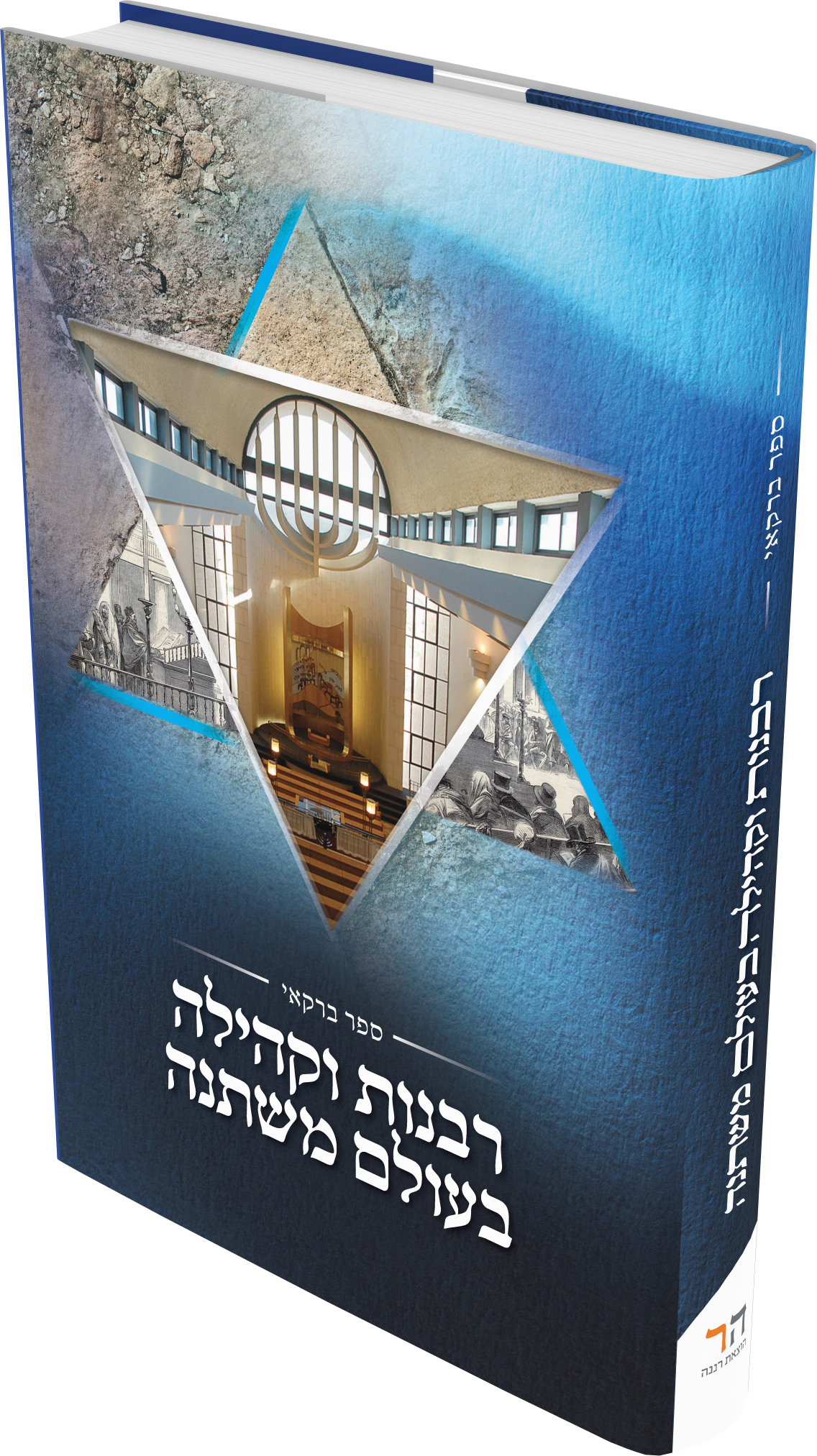
ספר ברקאי: רבנות וקהילה בעולם משתנה
Sefer Barkai: Rabbanut U’Kehillah BeOlam Mishtaneh
Hebrew typesetting for this collection of rabbinic essays combines single-column discussion with lettered subheadings, inset quotations and smaller numbered footnotes. Paired running heads distinguish each article and its contributor, while outside folios guide the right-to-left reading sequence.
Hebrew · Volume II
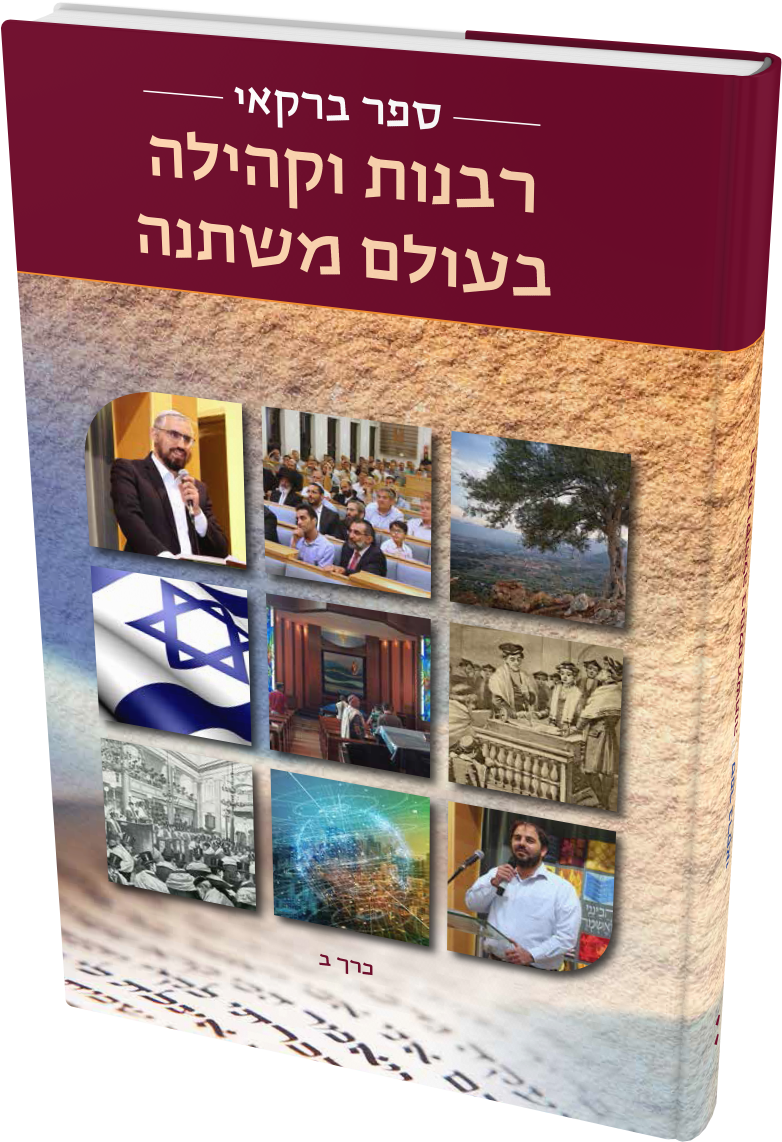
ספר ברקאי: רבנות וקהילה בעולם משתנה – כרך ב׳
Sefer Barkai: Rabbanut U’Kehillah BeOlam Mishtaneh
The second Barkai volume brings Hebrew discussion, practical questions and source quotations into a consistent single-column layout. Bold lettered and numbered headings divide the argument; compact footnotes, contributor running heads and outside folios support the longer essays.
English
English nonfiction typesetting uses a single column of serif text with indented paragraphs, small-cap running heads and centred folios. Italic biblical quotations, inset extracts and small-cap subheadings distinguish the supporting material; a labelled triangle diagram and compact footnotes fit within the same page structure.
English
Centred essay titles and small-cap openings organise these reflections on Bereishit. The single-column setting includes indented quotations, italic terms and compact footnotes, with running heads distinguishing the parashah from each essay and discreet asterisks separating sections.
English · Paperback edition
A compact English guide combines single-column serif text with bold sans-serif headings, italic questions and exercise passages set off by fine rules. Small-cap running heads and foot folios keep the pages consistent. Paired heart-rate graphs sit within the text measure, while spacious chapter openings, a small floral ornament and page-keyed reference notes distinguish the book’s different kinds of material.
English
Arno Pro typesetting gives this novel a continuous reading texture while accommodating dialogue, italic transliterations and explanatory footnotes. Large grey chapter headings and inset correspondence mark changes in the narrative, and the supplied monochrome frontispiece faces a restrained ornamental title page.
English
The English story uses a compact single-column setting with drop-cap chapter openings and clear dialogue paragraphs. Occasional verse is set apart from the prose, keeping the changes in voice visible while preserving a continuous narrative rhythm across the facing pages.
English · Hardcover
The novel pairs single-column narrative and dialogue with small-cap running heads for the title and author. Italic chapter headings and decorative drop capitals mark new chapters, while white space separates scenes within them. The preliminary pages include a contents list with dotted leaders and a landscape family tree drawn with connected name boxes; centred folios distinguish the Roman preliminaries from the Arabic-numbered story.
English
Text-led typesettingIllustrated booksJewish booksTranslationsHistory and biographyPhilosophy and spirituality
Jewish booksTranslationsHistory and biographyPhilosophy and spiritualityText-led typesettingIllustrated books
Serif single-column text is divided into short thematic passages with bold subheadings and small-cap running heads. Captioned historical photographs and book images sit alongside the translated writings, while italic transliterations and compact source references distinguish names, titles and quotations.
English
A single-column serif setting uses spaced paragraphs, hanging bullet points and numbered lists with bold leads. Sans-serif headings distinguish the main sections from smaller italic subheadings and reflective questions. Chapter openings have a written-out number, larger title and drop initial; outer running heads and folios identify the reading sequence.
English and Hebrew · Hardcover
Pointed Hebrew text in two columns sits alongside single-column English chapter summaries. Black chapter tabs and pale grey topic bands mark the hierarchy, while bilingual lists, ruled comparison tables, small commandment symbols and boxed QR reminders distinguish the different kinds of information.
English and Hebrew · Hardcover
Two-column pointed Hebrew is paired with single-column English summaries, with black chapter tabs and pale grey topic bands marking the structure. Ruled comparison tables, indented lists, bold numerals and small commandment symbols distinguish conditions and cases, alongside boxed QR references.
English
English Torah essays set in Arno, with Hebrew quotations and their English translations integrated into a single-column page. Paired running heads identify the book of the Torah and the current essay, while parasha names, essay titles and fine rules establish the hierarchy. The contents and glossary use aligned entries, clear indents and restrained changes of weight.
English · Paperback edition
Single-column text pairs serif body copy with sans-serif running heads and small-cap subheadings. Illustrated chapter openings use italic epigraphs and captions; compact endnotes and a two-column index support the narrative. ReWalk photograph: Mikhnenko773, CC BY-SA 4.0 (https://creativecommons.org/licenses/by-sa/4.0/).
English
Short Psalm meditations pair centred titles and a harp ornament with inset italic verses and outlined opening initials. Bold italic ‘Faith’s Response’ headings introduce the closing responses, while the single-column serif text, running heads and centred page numbers keep the repeated format consistent.
English
The essays use centred multiline titles, italic subtitles and bold subheadings above a single serif column. A small reproduced historical text is captioned separately; Hebrew words, bulleted lists, indented quotations and compact numbered footnotes provide further variation within the discussion.
English · Hardcover
Text-led typesettingIllustrated booksTables, charts and mapsJewish booksTranslationsHistory and biographyMemoirs and family histories
Jewish booksTranslationsHistory and biographyMemoirs and family historiesText-led typesettingIllustrated books
The memoir uses single-column prose with indented dialogue, italic book-title running heads and small-cap chapter heads. Chapter openings combine a large serif heading with a drop capital, while centred asterisks mark changes of scene. The closing picture section sets a landscape map beside photographs with centred italic captions; the afterword adds small-cap subheadings within the narrative.
English
A single-column Arno text setting for Zev Bar Eitan’s anthology of Abravanel’s Torah commentary. Centred portion headings, small-cap essay titles and fine rules distinguish the short discussions, with italic biblical quotations introducing the commentary. Mirrored running heads, outer folios and carefully spaced lists carry the structure through the five books of Moses.
English
English analysis of biblical songs combines Hebrew quotations, verse arranged in short lines and detailed footnotes. Small-cap subheadings and indented numbered outlines clarify the discussion, with transliterated terms distinguished in italics. The typesetting accommodates changing quotation lengths and note depths within a consistent single-column page.
English · First printing, hardcover
Text-led typesettingIllustrated booksScholarly apparatusTables, charts and mapsJewish booksBibles and biblical commentary
English scholarly typesetting uses a single-column serif text, indented biblical quotations with right-aligned references, and smaller numbered footnotes beneath short rules. Chapter openings combine italic chapter labels and bold titles over greyscale artwork; maps face the openings. Italic transliterations, occasional Hebrew notes and small-cap running heads carry the detail of the commentary.
English
A compact single-column serif setting carries the commentary and dialogue, with first-line paragraph indents and selective italic emphasis. Longer Scripture quotations are inset in italics, separating them from the surrounding prose; small-cap running heads and centred folios provide quiet navigation.
English
The English memoir uses a single-column serif text, indented paragraphs and centred sans-serif running heads. Chapter openings combine a viaduct drawing, small-cap numbering, italic subtitles and drop capitals; short rules accompany the heads and folios. A recipe within the narrative keeps its own heading and ingredient hierarchy.
English · Hardcover
Single-column prose combines numbered quotations with separately aligned source attributions. Script chapter labels and large serif titles mark new sections, supported by italic running heads, small-cap subject heads and centred folios. A Hebrew quotation retains its reading direction, while the reference list uses hanging indents and italic publication titles.
English
English single-column commentary uses small-cap question headings, italic biblical summaries and numbered footnotes. Chapter openings combine a decorative pointer image with centred headings; running heads, outer folios and a hanging-entry reference list guide the reader through the discussion of Joshua.
English · Hardcover
The novel uses single-column prose with indented dialogue paragraphs, italic words and centred asterisk scene breaks. Outer folios sit beside alternating book-title and author running heads, separated by fine vertical rules. Seasonal dividers and numbered chapter openings use open space, with dropped initials beginning the chapters.
English
Text-led typesettingJewish booksBibles and biblical commentaryScholarly and reference booksPhilosophy and spirituality
Jewish booksBibles and biblical commentaryScholarly and reference booksPhilosophy and spiritualityText-led typesetting
Quill ornaments, italic chapter labels and shaded introductory panels introduce each group of biblical questions. The single-column pages combine hanging bullet lists, italic transliterations and small-cap running heads; a compact two-column index provides a distinct reference layout.
English · Softcover
English typesetting for this historical novel, with single-column narrative, dialogue and extended italic passages. Centred small-cap subheadings and inset quotations distinguish changes of voice; chapter openings use large headings and a horizontal rule. A historical street map is fitted into the text, while alternating running heads and outer folios guide the reader.
English · Hardcover
Other contributors (22)
- Rabbi Dr. Aaron D. Twerski · Foreword
- Rose Alexander · Chapter contribution
- H. Norman Wright · Chapter contribution
- Becky Sweat · Chapter contribution
- Rabbi Avigdor Miller · Chapter contribution
- Rebbetzin Feige Twerski · Chapter contribution
- Rebbetzin Esther Jungreis · Chapter contribution
- Rabbi Simcha Feuerman · Chapter contribution
- Chaya Feuerman · Chapter contribution
- Benzion Sorotzkin · Chapter contribution
- David Pelcovitz · Chapter contribution
- George J. Nashak, Jr · Chapter contribution
- Elliot D. Samuelson · Chapter contribution
- Rabbi Avrohom Bleich · Chapter contribution
- Rabbi Levi I. Brackman · Chapter contribution
- Rabbi Michael J. Broyde · Chapter contribution
- Rabbi Reuven P. Bulka · Chapter contribution
- Rabbi Eli J. Mansour · Chapter contribution
- Rabbi Shalom Smith · Chapter contribution
- Rabbi Shlomo Wexler · Chapter contribution
- Mary E. Stevenson · Appendix
- Prof. Mark T. Morman · Appendix
Chapter openings use italic titles, separate contributor bylines and large initials. Single-column case histories are divided by small-cap case labels, while advice lists use open triangular bullets and hanging continuations. The research appendix introduces numbered questions and small-cap section headings; its closing bibliography aligns hanging entries, with italic publication titles and separate contributor notes. Italic running heads and centred folios carry the sequence.
English
Single-column serif text combines italic terms and quotations with numbered footnotes. Small-cap section headings and paired author and chapter running heads guide the long study, while large monochrome photographs sit above captions and the continuing text.
English
English typesetting for this study of Elijah. Italic chapter numbers and a small staff illustration introduce shaded chapter summaries, followed by single-column prose. Letterspaced small-cap subheadings, indented numbered lists and compact ruled footnotes organise the discussion. Alternating book and chapter running heads keep the short sections easy to navigate. The reading text, chapter headings and footnotes are set in Arno, using its regular, italic and small-text styles.
English
Single-column serif text accommodates colour diagrams, numerical lists and labelled figures within a consistent page structure. Sans-serif subheadings, italic quotations and small-cap running heads distinguish the elements, while paragraph indents and outer folios keep the longer discussion easy to follow.
English · Paperback – first edition
The reading text is set in Arno, with Proxima Nova headings. Continuous prose, italic passages and hand-drawn illustrations share the single-column pages, while chapter openings use a clear hierarchy and generous space.
English · Hardcover
The memoir is set in single-column prose with indented dialogue paragraphs. Italic passages distinguish inner speech, and centred groups of three asterisks separate scenes. The book title in small capitals alternates with the author’s name in italic in the running heads, above centred italic folios.
English · Hardcover – first Toby Press edition
The novel is set in Adobe Garamond, with italic running heads, outer folios and indented paragraphs. Dialogue and italic emphasis sit within the continuous single-column text. Numbered chapter headings use italic words above a large dropped initial, retaining the blank facing page where it occurs in the original.
English
Arno text gives this memoir a steady single-column rhythm, with italic chapter titles, numbered openings and clear subheadings. Handwritten-style quotations beside fine vertical rules provide a contrasting voice, while longer quotations and their indented source credits retain a separate hierarchy.
English and Hebrew
Single-column serif text combines indented quotations, italic transliteration and numbered footnotes beneath short rules. Small-cap running heads and outer folios organise the commentary, while ornamental chapter openings, a framed Hebrew prayer and an annotated list of sources give the book distinct levels of reading.
English
Single-column serif pages use italic subheadings and smaller capital headings to distinguish levels within the discussion. Longer Scripture quotations are inset in roman type with separate references, while shorter quotations and italic emphasis stay within the prose. Small-cap running heads and centred folios support navigation through the continuous text.
English · Hardcover · second edition, 2007
The historical text combines single-column prose, indented documentary quotations and illustrations with centred captions. Reference lists use small-cap subheadings and hanging continuations; chapter-grouped endnotes keep numbers aligned beside longer citations. A two-column index closes the volume with hanging entries, alphabet headings and italic cross-references.
English · First edition · paperback
The single-column English text is set in Arno, with Requiem chapter headings and small-cap running heads. Drop capitals, indented paragraphs and inset quotations structure the essays; italic transliterations and superscript references lead to endnotes with hanging numbers.
Hebrew
Text-led typesettingIllustrated booksJewish booksTranslationsHistory and biographyMemoirs and family histories
Jewish booksTranslationsHistory and biographyMemoirs and family historiesText-led typesettingIllustrated books
This Hebrew edition of Faith at the Brink combines single-column narrative with captioned historical images and numbered footnotes. Bold chapter openings and alternating running heads establish the hierarchy; italic Latin quotations, Hebrew translations and mixed-direction references sit within the right-to-left page structure.
Hebrew
The Hebrew translation uses single-column text with bold subheadings, italic emphasis and alternating running heads. Shaded inset passages span facing pages, while numbered chapter openings, epigraphs and a question-and-answer appendix distinguish the book’s different kinds of text.
Hebrew
Right-to-left Hebrew text uses a steady single-column measure, indented paragraphs and compact bold subheadings. Chapter letters sit between fine rules above larger titles; dropped opening letters and occasional italic quotations distinguish the chapter openings from the continuous discussion of educational leadership.
Hebrew · Hebrew scholarly monograph
Hebrew typesetting combines single-column research text, bold names and quotations, and smaller numbered footnotes. Full-page manuscript facsimiles and compact captions sit within the same running-head and folio system, keeping the historical documents distinct from the modern discussion.
Hebrew
Text-led typesettingIllustrated booksJewish booksTranslationsHistory and biographyMemoirs and family histories
Jewish booksTranslationsHistory and biographyMemoirs and family historiesText-led typesettingIllustrated books
Hebrew single-column narrative combines indented paragraphs, running heads and historical photographs with captions. Latin-script names and titles are integrated into the right-to-left text; documentary song texts preserve their original lineation, and a separate Latin-script bibliography uses hanging entries.
Hebrew · First Hebrew edition
The Hebrew edition preserves the right-bound order of photographs, captions and single-column essays. Large grey numbers sit behind bold essay titles, with boxed English dedications, narrow vertical contributor and topic tabs, pointed Hebrew quotations and outer folios.
Hebrew
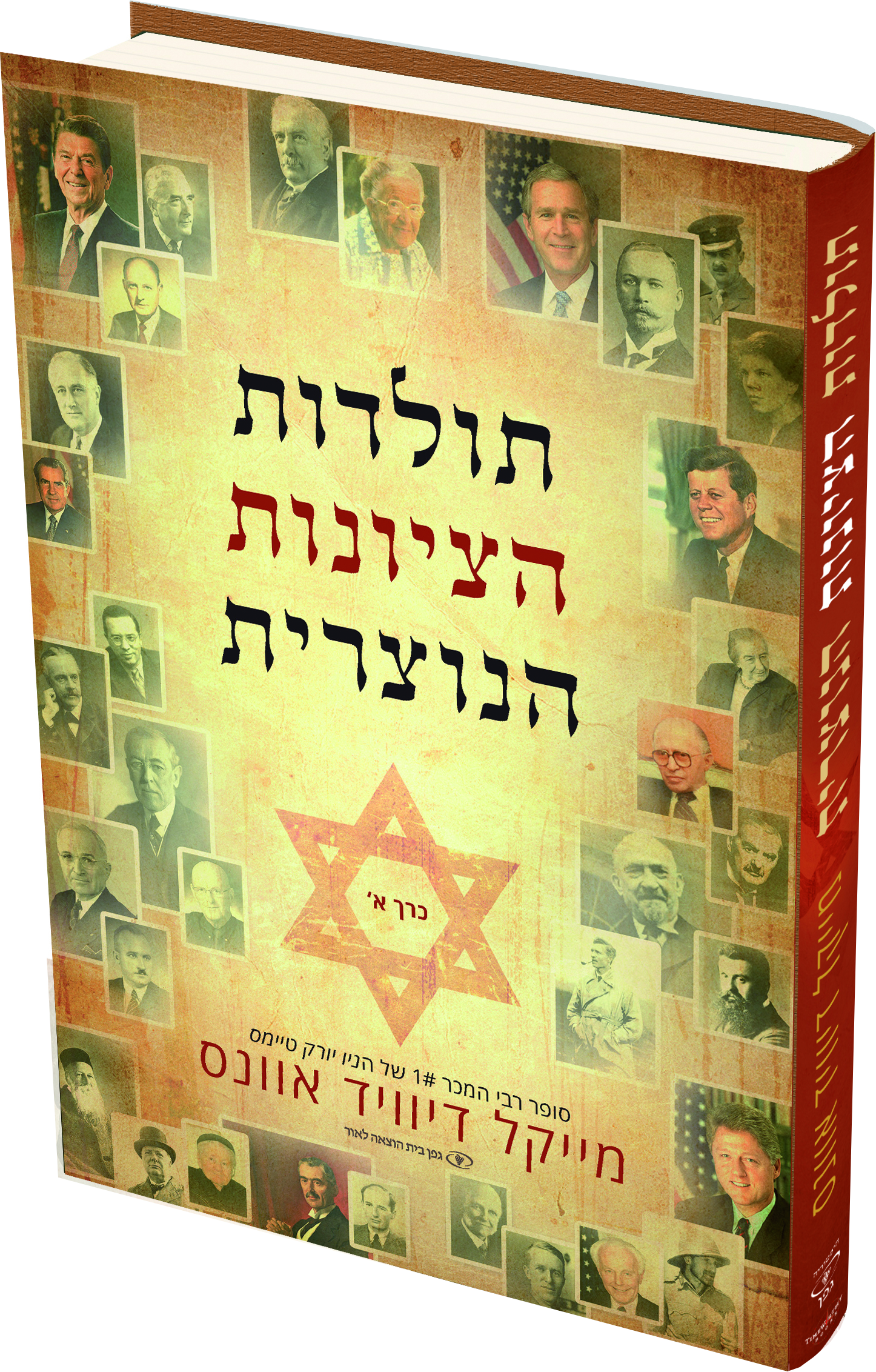
The first Hebrew volume of The History of Christian Zionism pairs single-column narrative with captioned historical collages. Ornamented chapter openings use centred epigraphs and dropped Hebrew letters; italic English titles, inset quotations and alternating author and book-title running heads retain a clear hierarchy.
Hebrew
This Hebrew translation of Thou Shalt Innovate uses a right-to-left, single-column setting with bold subheadings, superscript note references and alternating running heads. The endnotes bring Hebrew references, Latin titles, dates and web addresses together in compact numbered entries with hanging alignment.
Hebrew
Text-led typesettingJewish booksTranslationsChildren’s and educational booksPhilosophy and spirituality
Jewish booksTranslationsChildren’s and educational booksPhilosophy and spiritualityText-led typesetting
The Hebrew translation of A Passion for a People uses a compact single-column setting with alternating part and chapter running heads. Numbered chapter openings combine centred titles, fine rules and italic quotations, while clear subheadings and indented paragraphs organise the discussions of Jewish peoplehood.
No books match these filters. Try another title or clear the filters.
Individual volumes and editions are listed separately. The collection grows as we add more of our work.