Raphaël is a master of his craft, an artist who blends technical skill with keen aesthetic awareness. With quick turnaround times, attention to detail, and an unmatched level of customer service, it is always a pleasure to work with him. Each project with him is visually stunning and profoundly elegant. His contribution to the book shows how proper typography greatly enhances the reader’s experience with the final product.
Dates use the first edition in the language and format shown where verified. Other entries retain their recorded work dates while we check them. Books without a confirmed date follow alphabetically.
English explanations alternate with vocalised Hebrew source quotations and indented translations. Italic running heads identify the section, while smaller numbered notes remain below short rules. Renana Typesetting’s printed credit names Elisheva Wadler for the typesetting.
The commentary combines single-column English prose with vocalised Hebrew verses, English translations and centred small-cap section headings. Smaller source notes sit beneath short rules, and the running heads distinguish the book title from the weekly Torah portion.
Typesetting for an English halachic handbook, with numbered provisions, nested bullet points and frequent source notes. Bold sans-serif headings distinguish lettered sections and smaller topics from the serif body text. Italic transliterated terms, superscript references and footnotes below fine rules preserve the hierarchy within compact reference pages.
The English translation is set in a single serif column, with a contrasting sans-serif chapter heading and a pale summary beside a fine vertical rule. Numbered explanatory notes occupy a smaller text size below short rules, keeping the translation and its annotation distinct.
English and Hebrew typesetting for a companion to Samuel. Hebrew source passages with bold reference headings alternate with English translations and discussion. Bold English subheadings and bulleted questions distinguish the study sections; small-cap running heads, italic chapter references and outer folios maintain the structure across dense bilingual pages.
Single-column Torah essays use small-cap subheadings, indented quotations and compact footnotes beneath a short rule. Hebrew phrases sit within the English text, while alternating running heads and outside folios distinguish the book and essay titles.
English typesetting for the second volume of Reclaiming Redemption. Large uppercase sans-serif chapter titles and smaller subsection headings contrast with the serif narrative. Vocalised Hebrew extracts and occasional Hebrew phrases are integrated with the English discussion, supported by italic transliterations, superscript references and compact footnotes beneath short rules.
A single serif column carries the business advice, with contrasting sans-serif subheadings and occasional compact footnotes. Chapter openings use a small-cap chapter number above a centred title, set low on an otherwise open page.
English typesetting for a study of character through the weekly Torah portions. Chapter openings pair a small-cap portion name with a large serif title. Small-cap Character Challenge prompts and grey quotation panels with inset borders distinguish the reflective material, while italic attributions, superscript references and ruled footnotes retain the source information.
English essays are interspersed with right-to-left Hebrew source passages and their English translations. The smaller footnotes accommodate both languages beneath short rules; small-cap running heads and outside folios keep the facing pages clearly identified.
The study uses a single serif column with indented quotations, small-cap subheadings and substantial footnotes beneath short rules. Chapter openings combine an italic chapter number with a bold sans-serif title, distinguishing the larger divisions from the detailed commentary.
Short studies of Hebrew words are organised under numbered bold headings, with Hebrew forms embedded in the English prose. Bulleted lists, indented quotations and small asterisk dividers vary the structure, while compact source notes remain beneath short rules.
The essays use a single serif column with numbered bold subheadings and compact footnotes. Centred chapter titles sit below small-cap chapter numbers and a fine rule, with generous opening space separating new chapters from the continuous discussion.
The English study combines serif commentary with contrasting sans-serif headings, indented source extracts and numbered footnotes. The selected pages also show compact comparison tables and a branching question diagram, alongside Hebrew quotations and their English translations.
The English text combines bold subheadings, indented dialogue and quotations, and a labelled psychological diagram. Chapter openings use centred headings above a fine rule, italic epigraphs and large drop capitals; compact footnotes and centred folios complete the page structure.
Serif discussion is paired with labelled scientific diagrams, figure captions and compact footnotes. Larger sans-serif headings, marked by a pale vertical rule at section openings, separate the main divisions, while small-cap and italic running heads identify the surrounding argument.
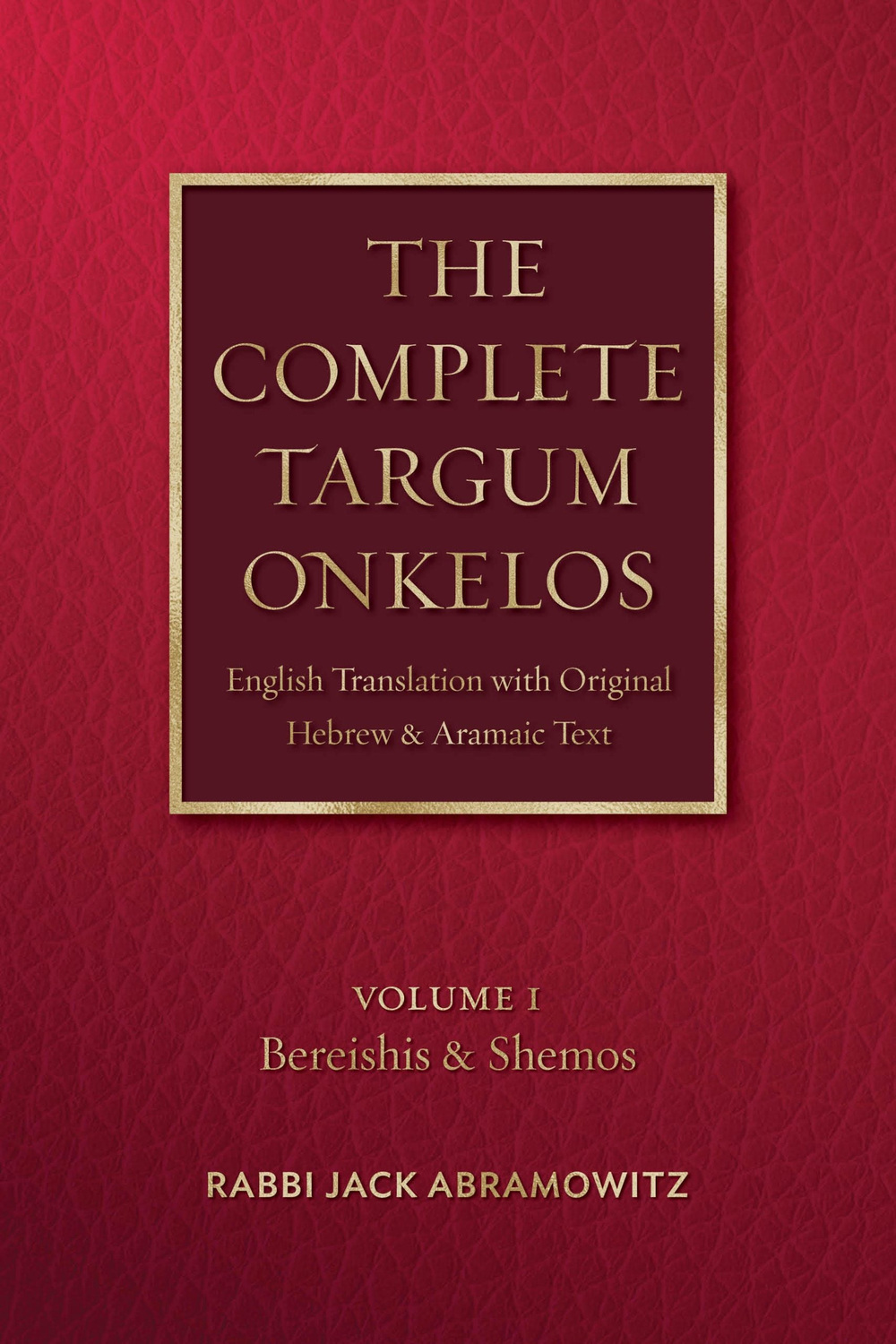
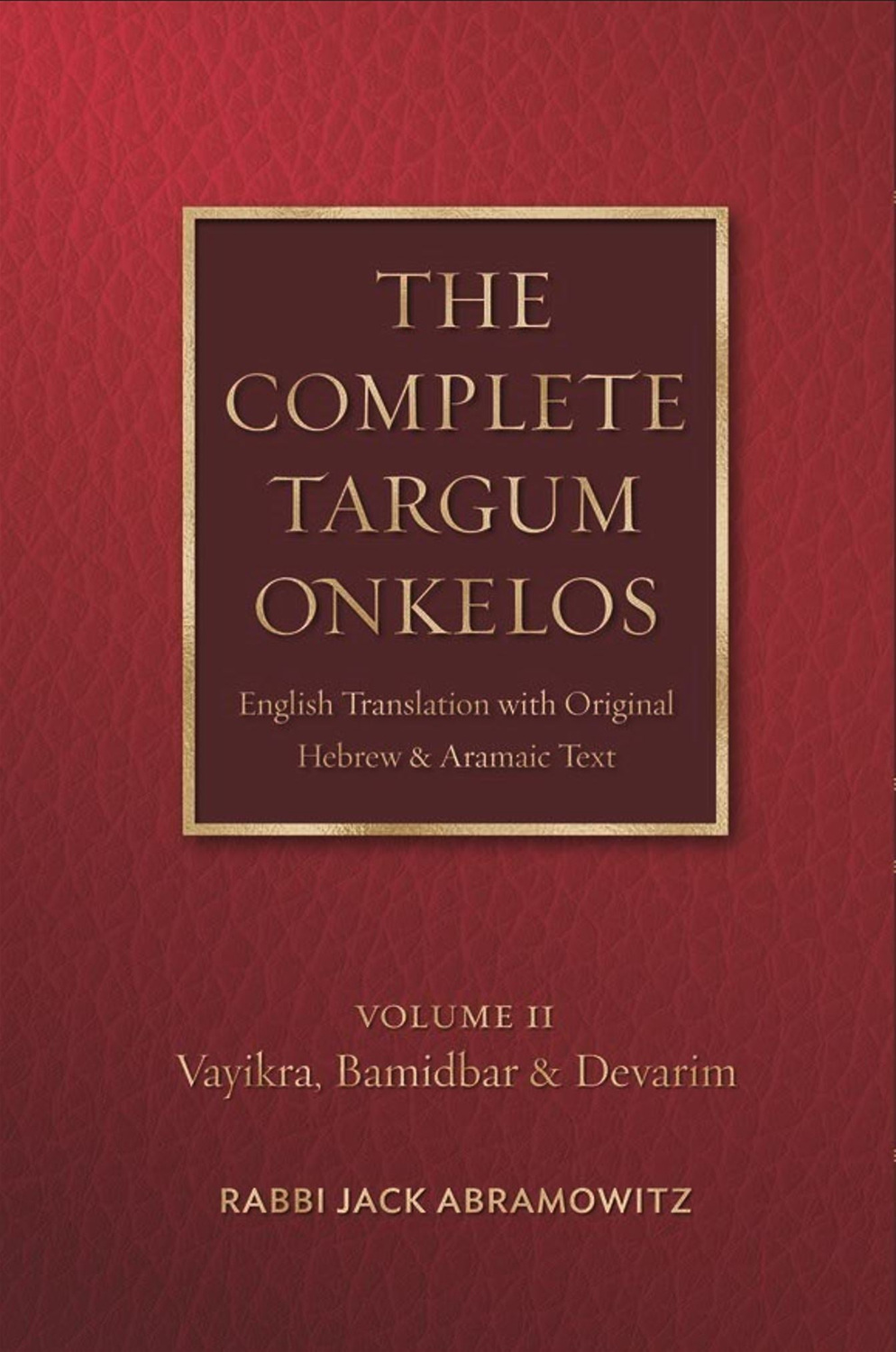
The second volume maintains a coordinated Hebrew, Aramaic and English page design, distinguishing the cantillated Torah text, smaller pointed Targum and Arno Pro translation. Bold English phrases, numbered translation notes and ribbon-shaped reading markers guide the reader through sections of different lengths without separate facing-language columns.
The English commentary incorporates Hebrew phrases and longer right-to-left quotations without leaving the single-column format. Smaller bilingual notes sit beneath short rules, with small-cap running heads and outside folios distinguishing the book from each Pesach topic.
Bold sans-serif chapter headings and framed explanatory panels distinguish the main divisions within the serif commentary. Indented or boxed biblical quotations sit alongside extensive numbered footnotes, with small-cap running heads and outside folios identifying each spread.
Vocalised Hebrew source passages alternate with English translations and commentary in a single serif column. The footnotes accommodate extended Hebrew extracts as well as brief references; chapter openings use a small-cap portion heading, fine rule, larger title and drop capital.
Numbered essays, bulleted and numbered lists, and small asterisk dividers organise the English studies. Hebrew words are set within the prose, while a calligraphic section title marks the Hebrew-roots division. Compact footnotes, running heads and centred folios provide the supporting structure.
Three-language typesetting brings cantillated Hebrew, pointed Aramaic and English translation together in successive text blocks. Arno Pro English, bold translation distinctions, compact footnotes and ribbon-shaped reading labels establish a clear hierarchy, while the introduction accommodates Hebrew quotations and transliterations.
The guide combines serif explanations with sans-serif subheadings, numbered practical lists and framed bilingual passages. Chapter openings use a ruled chapter label and contrasting title; the prayer section pairs English translations with vocalised Hebrew on facing pages.
Each essay opens with an italic psalm reference above a bold sans-serif title and a large drop capital. Serif commentary includes indented biblical quotations and numbered lists, with gathered notes at essay endings and short source-credit notes beneath a rule.
The essays use centred multiline titles, italic subtitles and bold subheadings above a single serif column. A small reproduced historical text is captioned separately; Hebrew words, bulleted lists, indented quotations and compact numbered footnotes provide further variation within the discussion.
Large serif Torah-portion headings introduce the essays, with smaller italic titles marking the psychological themes. The single-column English discussion incorporates occasional vocalised Hebrew quotations and translations, while small-cap running heads and outside folios identify the book and portion.
English
Edited by Jeffrey Bloom, Alec Goldstein and Gil Student
This multi-author volume uses centred essay titles, small-cap contributor names and clearly graded section headings. Continuous English text is interspersed with indented quotations and compact footnotes, while running heads distinguish the contributor from the essay title. The typesetting keeps long philosophical arguments and their references on an orderly page.
English analysis of biblical songs combines Hebrew quotations, verse arranged in short lines and detailed footnotes. Small-cap subheadings and indented numbered outlines clarify the discussion, with transliterated terms distinguished in italics. The typesetting accommodates changing quotation lengths and note depths within a consistent single-column page.
Short daily chapters use a light sans-serif day number above a bold thematic title, set apart from the serif reading text. Small-cap opening words, italic emphasis and concise running heads establish the hierarchy. Rounded question panels with ruled writing space provide a distinct place for the reader’s response.
This study of repentance integrates Hebrew source passages and English explanation within a single reading column. Chapter openings pair an italic chapter number with a larger serif title and a separate dedication panel. Compact footnotes, italic transliterations and alternating book-and-chapter running heads support the extended discussion.
These short essays combine English prose, Hebrew words and italic transliterations, with numbered footnotes kept below short rules. Centred numbered essay headings, modest internal subheadings and spaced asterisks distinguish new pieces from closing remarks. Consistent running heads and bottom folios maintain continuity as the articles change length.
English book design and typesetting in Arno Pro brings together commentary, Hebrew source quotations and English translations. Bold verse openings, italic transliterations and small-cap citations distinguish the text, while ruled asterisked footnotes and act-and-scene running heads support navigation.
No books match these filters. Try another title or clear the filters.
Individual volumes and editions are listed separately. The collection grows as we add more of our work.